Feet & Footing
That First Step Out Of Bed Isn't Age. It's The Same Tissue Tearing Open Again.
The pain that is worst after rest and fades with movement has a name and a mechanism. It also explains why four pairs of expensive shoes changed nothing.
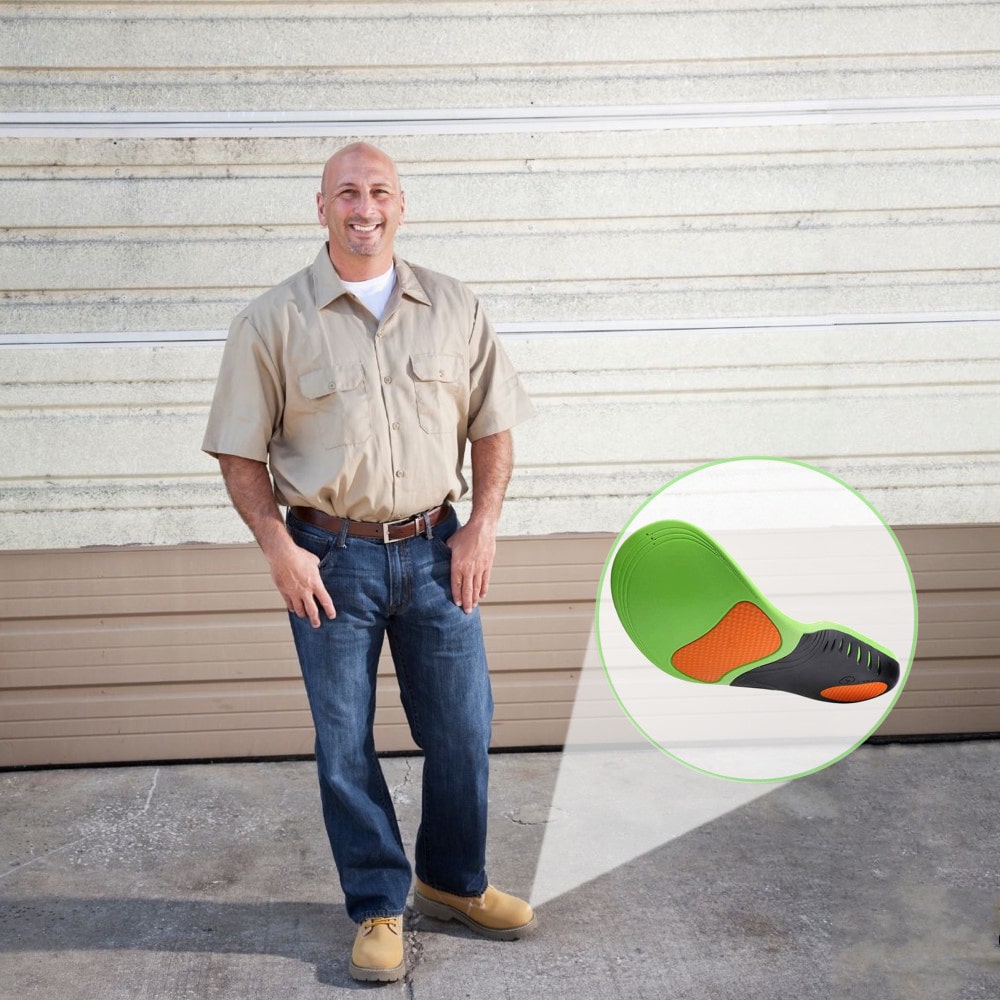
Everyone describes it with the same word: a knife. The first step out of bed, straight through the heel. The next twenty are bad. By the time you are dressed it has faded to a dull complaint, and you tell yourself it was nothing.
Then you sit through a meeting, stand up, and the knife is back. That signature — worst after rest, better with movement, back again after sitting — is not random and it is not aging. It is a piece of tissue on the underside of your foot going through the same cycle twice a day, every day.
The band that holds your arch up
Running from your heel to the ball of your foot is a thick strip of connective tissue: the plantar fascia. Its job is to hold the arch like a spring — stretching to absorb impact, recoiling to push you forward. Eight to ten thousand times a day, on tile, concrete and hardwood.
When the arch flattens further than it should, from years of standing, from added weight, or simply from how your foot is built, that band takes tension it was never designed to hold continuously. Irritation accumulates where it anchors into the heel bone.
Why rest makes it worse — and what you are actually doing at 7am
This is the part that sounds backwards until you see it. Overnight, with the foot relaxed and pointed slightly downward, the fascia shortens and the irritated tissue begins to knit together in that shortened position.
Your first step in the morning pulls it apart again. That is the knife. Twenty steps later the tissue has stretched back out and the pain settles — and then every long stretch of sitting during the day repeats the whole cycle in miniature. You are not walking it off. You are ripping it back open, and then doing it again after lunch.
Why the expensive shoes did nothing
This is the most common frustration people describe: four pairs of shoes, same pain, and a growing suspicion that something is seriously wrong with them. Usually nothing is.
Almost every insole sold at a pharmacy is cushioning — a soft layer that feels wonderful for the first hour and does nothing structural. Cushion absorbs impact. It does not stop the arch from collapsing, and the collapse is what is loading the fascia in the first place. A well-cushioned running shoe with no arch structure lets the arch flatten exactly as far as a cheap one does. The logo does not enter into it.
Support is a shape, not a softness
Structured arch support does the opposite of cushion. It sits under the arch and physically limits how far it flattens with each step, so the band stops being stretched to its limit ten thousand times a day.
Add a deep heel cup — a rigid wall around the heel — and the fat pad under your heel bone stays centred where nature put it, instead of spreading sideways under load. That fat pad is your original shock absorber. Keeping it in place is free padding you already own and have been slowly losing the use of.
The compounding problem above the foot
A foot that hurts changes how you walk before you consciously notice. You roll off the outside edge, you shorten the stride on that side, you stand with more weight on the other leg.
Do that for months and the complaints tend to migrate upward — the knee on the compensating side, the hip, the lower back. People often arrive at a new problem entirely and never connect it to the heel that started it.
The three-part routine, in order of impact
First: structured support in the shoe you actually wear, and move it between pairs. Support sitting in a shoe you never put on is support you never get.
Second: do not take the first step of the day barefoot. Keep the supportive shoe beside the bed. That single unsupported step is the one that reopens everything.
Third, and it costs nothing: before you stand up, pull your toes back toward your shin and hold for thirty seconds, three times. You are pre-stretching the band so it does not get torn open cold. Ninety seconds, and it is consistently the cheapest win available.
Expect the strange week
Real arch support feels odd for the first three to five days, and it should — it is holding your foot in a position it has not held in years. Some people feel a mild ache in the arch as load redistributes. That fades. The mistake is quitting on day two and deciding it does not work.
Measure it properly: count the steps each morning before the pain fades. When that number starts falling, the tissue is settling. That is the signal, and it comes before the pain fully goes.
When to see a doctor
- Pain that started with a specific injury or fall
- Numbness or tingling in the foot
- Redness, heat and swelling in the heel
- No change at all after several weeks of support
- Any open wound on the foot — especially with diabetes
Shoes wear out and get replaced every year or two. The foot inside them never does. Supporting the arch is the difference between managing the same morning forever and giving the tissue the conditions to finally settle.